French roulette: bets, payouts and odds
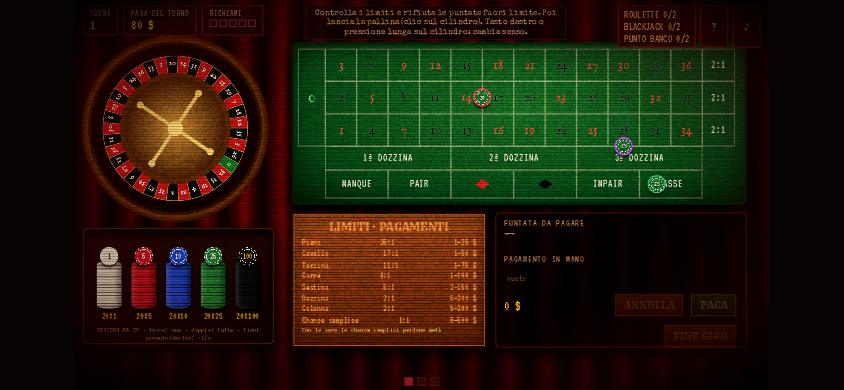
French roulette has 37 numbers, from 0 to 36, and a single green zero. Each bet has a payout rate that depends on how many numbers it covers: the more numbers you cover, the less it pays. Here are the main bets and how they are worked out.
Updated:
Bets and payouts
| Bet | Numbers covered | Pays |
|---|---|---|
| Straight up | 1 | 35 to 1 |
| Split | 2 (on the line between two numbers) | 17 to 1 |
| Street | 3 (a row) | 11 to 1 |
| Corner | 4 (a corner) | 8 to 1 |
| Six line | 6 (two rows) | 5 to 1 |
| Dozen | 12 | 2 to 1 |
| Column | 12 | 2 to 1 |
| Even-money bet | 18 (red/black, even/odd, low/high) | 1 to 1 |
The payout refers to the winnings: betting 10 on a straight up and winning gives you 350 plus your 10 stake.
The zero rule
In French roulette, when 0 comes up the even-money bets do not lose everything: half of the stake is returned to the player. This rule reduces the house edge on even-money bets.
Probability and house edge
With 37 numbers, the probability of a straight up is 1/37, about 2.7%. A 35 to 1 payout would be fair with 36 numbers; the extra zero creates the house edge, about 2.7% on bets with a normal payout. No combination of bets changes this ratio: every spin is independent of the previous one.
The order at the table
For the croupier the order matters: after the ball stops you place the dolly on the winning number, collect the losing bets starting with the columns, then even-money bets, dozens and finally the other combinations, and you pay the winners from the smallest to the largest. Following the order avoids errors and arguments.
Where to practise
The game Eternal Shift simulates this procedure with virtual money and tells you if you pay or collect in the wrong order.